
IT governance: enabling delivery and reliability
For boards, CEOs and CIOs, the objective of IT governance is simple:
increase the likelihood that technology delivers what the business needs — and that it operates reliably.
Good IT governance is not about control or bureaucracy. It is about clarity, confidence and consistency in technology decision-making.
When governance is effective:
- technology investment aligns with business priorities
- delivery teams understand what matters most
- risks are identified early and managed deliberately
- systems operate more reliably
- leadership sees fewer surprises
In short, governance improves outcomes.
A practical way to think about IT governance
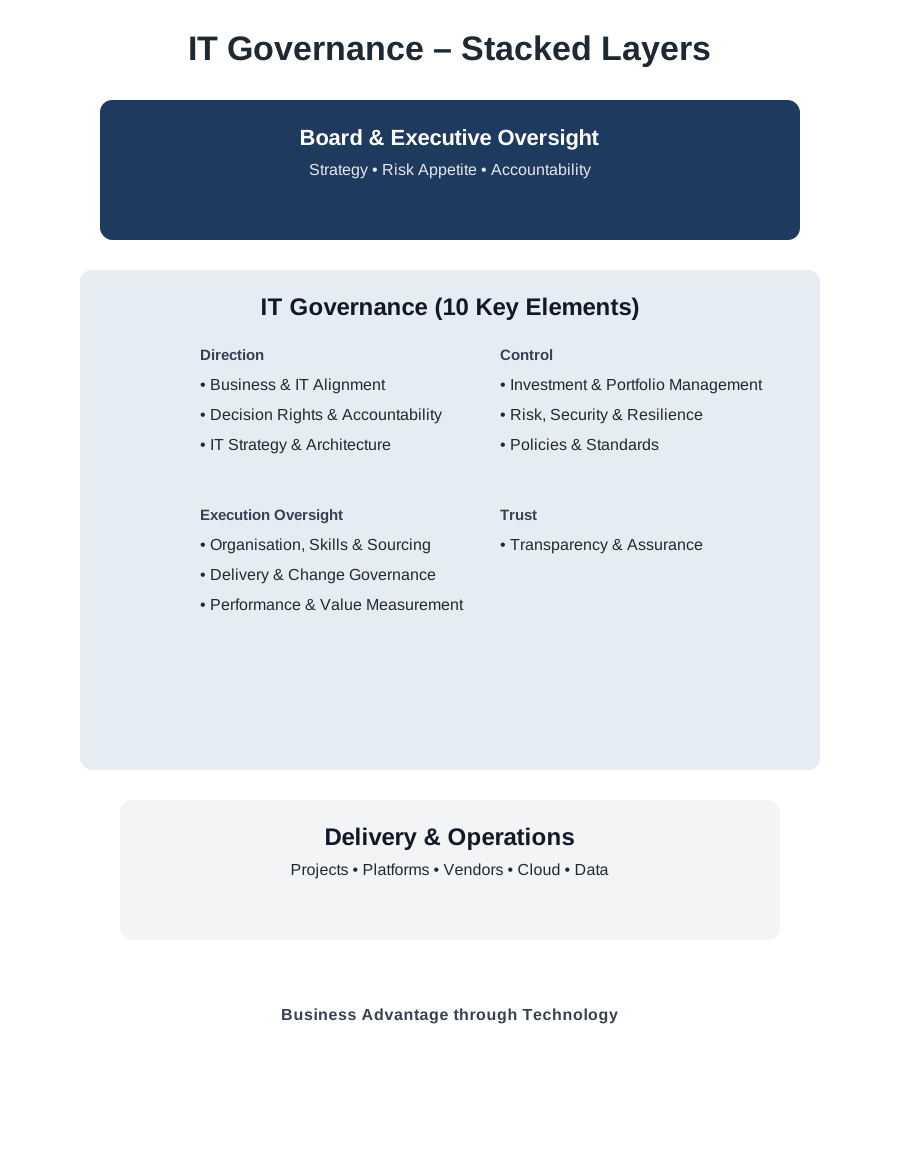
The stacked-layers model shown above reflects how effective organisations approach governance:
- Board and executive oversight sets direction, agrees risk appetite and provides accountability
- IT governance translates strategy into clear priorities, guardrails and decision rights
- Delivery and operations execute with confidence, speed and reliability
This structure does not slow delivery — it makes successful delivery more likely.
Why this matters now
As organisations rely more heavily on digital platforms, cloud services, data and AI, technology has become critical to both performance and resilience.
Strong IT governance:
- supports growth and change
- improves operational stability
- strengthens cyber and data resilience
- builds trust at board level
It allows leaders to move forward with confidence, knowing that technology decisions are aligned, controlled and transparent.
Effective IT governance is an enabler of delivery and reliability — and a foundation for sustained business performance.
Business Advantage through Technology